
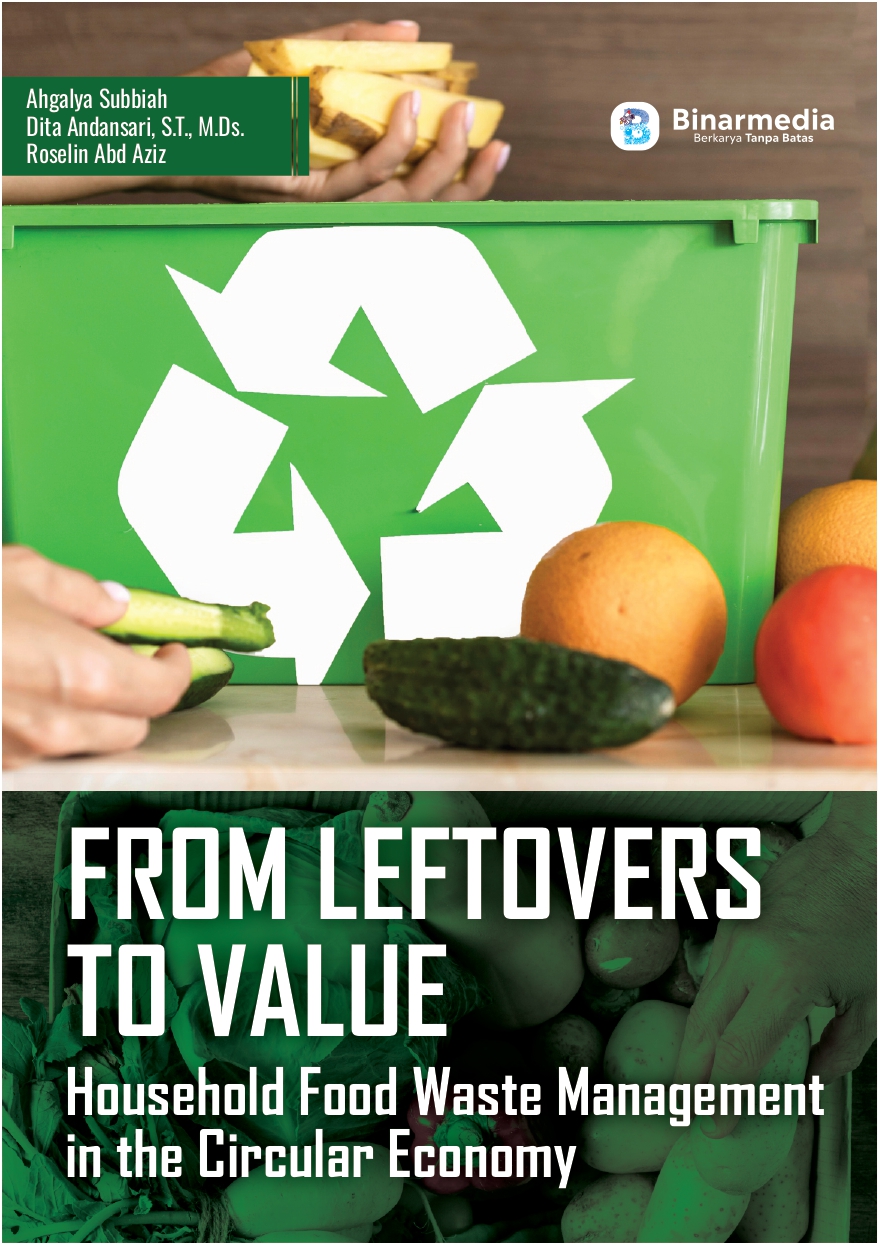
Food waste is often seen as an inevitable part of modern life: a little bit of rice left in the pot, vegetables forgotten at the back of the fridge, bread that goes stale before anyone eats it. Yet when millions of households repeat these small losses every day, the result is a serious social, economic, and environmental problem. Around the world, households are responsible for a significant share of total food waste, and much of what they throw away is still perfectly edible when it first reaches the bin.
This book, From Leftovers to Value: Household Food Waste Management in the Circular Economy, was written to address that everyday reality. It is not only about statistics, policies, or technologies, but about the decisions that individuals and families make at home: what to buy, how to store food, what to cook, and what to do with what remains.
By connecting these daily practices to circular economy principles reducing waste, keeping products and materials in use, and regenerating natural systems the book shows how meaningful change can begin in our own kitchens. It combines research evidence, real‑world examples, and practical frameworks to help readers manage household food surplus more intelligently and creatively, turning leftovers from a problem into a resource and a starting point for more sustainable habits.
Writter

Ulasan
Belum ada ulasan.